
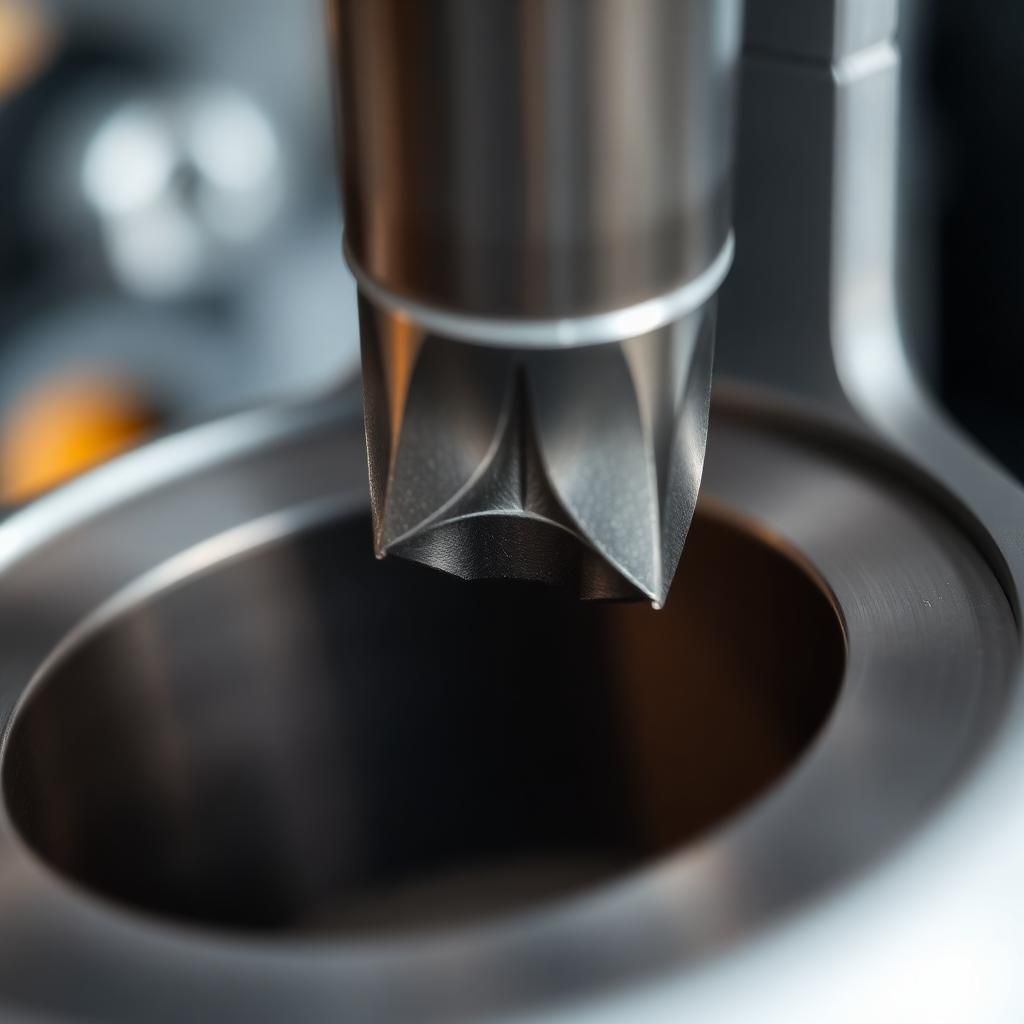
Selecting the Right Cavity Tool for Sun Hydraulics T-Series Cartridges
Why cavity geometry matters
Sun Hydraulics T-series cavities are tightly toleranced, and a single deviation in step diameter or shoulder height can cost the OEM a costly rework cycle. Selecting the right cavity tool starts with a precise match between the SAE-defined cavity drawing and the tool's profile — JIAYI tools are ground to ±0.005 mm against the master gauge for every batch.
Cavity reference chart
Use this quick lookup to pair the most common Sun T-series cavities with the JIAYI tool family and recommended substrate.
Cavity Nominal Ø Tool Family Recommended Substrate
T-2A 9.53 mm JY-CAV-T2A K20 sub-micron
T-10A 19.05 mm JY-CAV-T10A K20 sub-micron
T-11A 22.23 mm JY-CAV-T11A K30 reinforced
T-17A 31.75 mm JY-CAV-T17A K30 reinforced
Substrate selection
For ductile iron and 4140 manifold blocks, a sub-micron carbide grade (K20–K30 range) gives the best balance of edge strength and wear resistance. For 6061-T6 aluminum manifolds, a polished K10 grade with a sharp cutting edge will avoid built-up edge and deliver mirror-finish bores.
Coating recommendations
Coating choice should follow the workpiece, not the cavity size.
Steel and ductile iron: AlTiN at 80–120 m/min cutting speed.
Aluminum manifolds: uncoated polished or DLC — never AlTiN.
Stainless 316L: AlCrN with high-pressure coolant.
Speeds, feeds and coolant
Through-coolant is strongly recommended for T-11A and larger cavities. Maintain 40 bar minimum coolant pressure to evacuate chips from the blind cavity. Reduce feed by 30% on the finishing pass to hold the surface finish under Ra 0.8.
"Eight out of ten cavity rejects we audit trace back to coolant pressure, not tool geometry."